In the past decade, FMCG marketing budgets have tilted heavily toward digital. And for good reason — digital ads are trackable, scalable, and deployable overnight. But there is a persistent gap between what digital advertising delivers and what a brand actually needs at the moment of consumer acquisition: a physical trial.
The Limitation of Digital Impressions
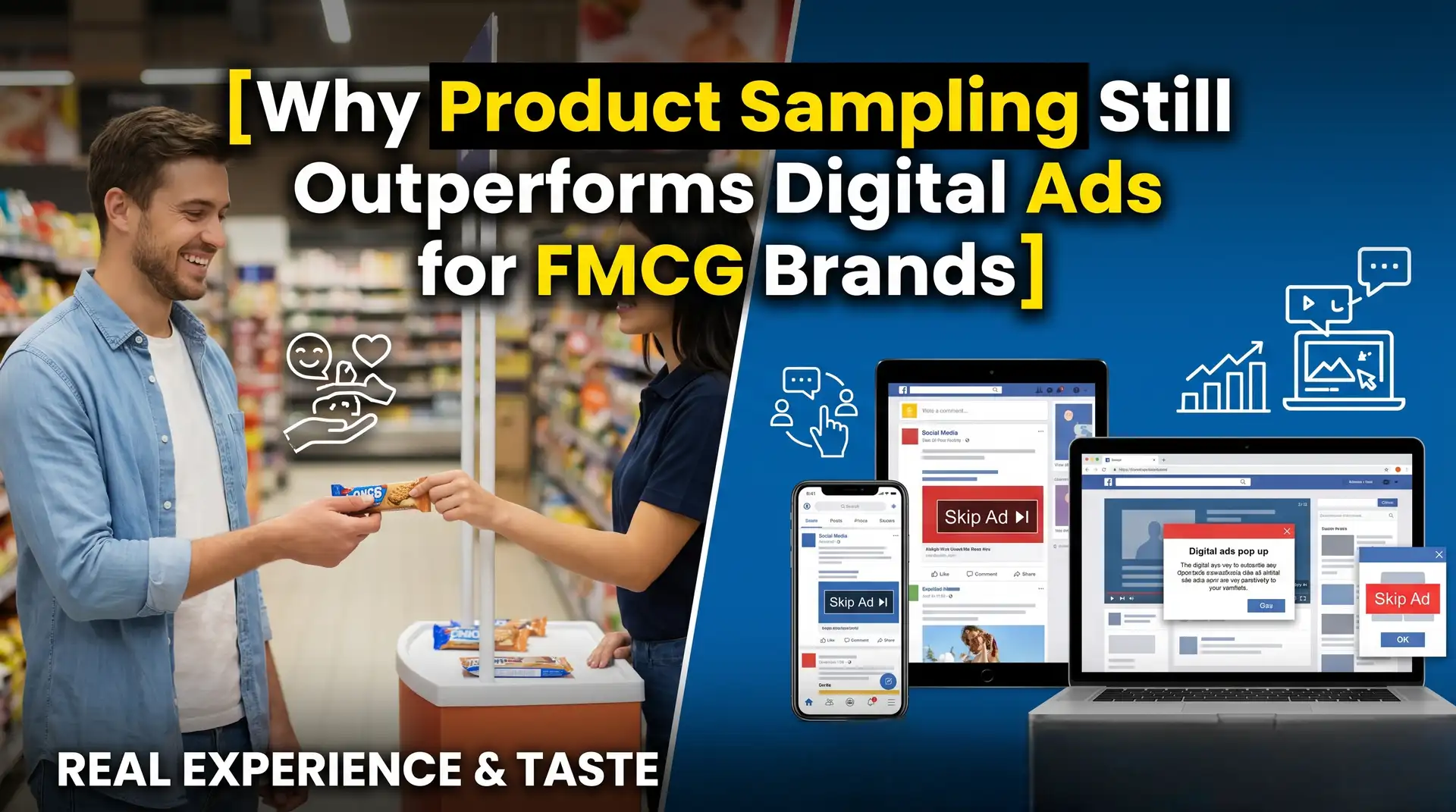
A digital impression is not an experience. A consumer who sees your banner ad while scrolling through a news feed has been exposed to your brand — but they have not tried your product. They have not held it, tasted it, smelled it, or made a personal decision about whether it belongs in their life. In categories where trial drives conversion — food, beverage, personal care, household goods — the gap between exposure and trial is where most of your acquisition cost lives.
Average click-through rates for display advertising sit below 0.1%. Even in well-optimised campaigns, you are paying for thousands of impressions to generate a handful of genuinely engaged consumers. Most of them have still not tried your product.
The question is not whether your brand is visible. It is whether the consumer has formed an opinion about it based on direct experience.
What a Sample Actually Does
When a consumer receives your product through a precision-targeted sampling campaign, something categorically different happens. They use it. They form an opinion. And critically — they form that opinion in the context of their real life, not in the distracted 30-second window of a social media scroll.
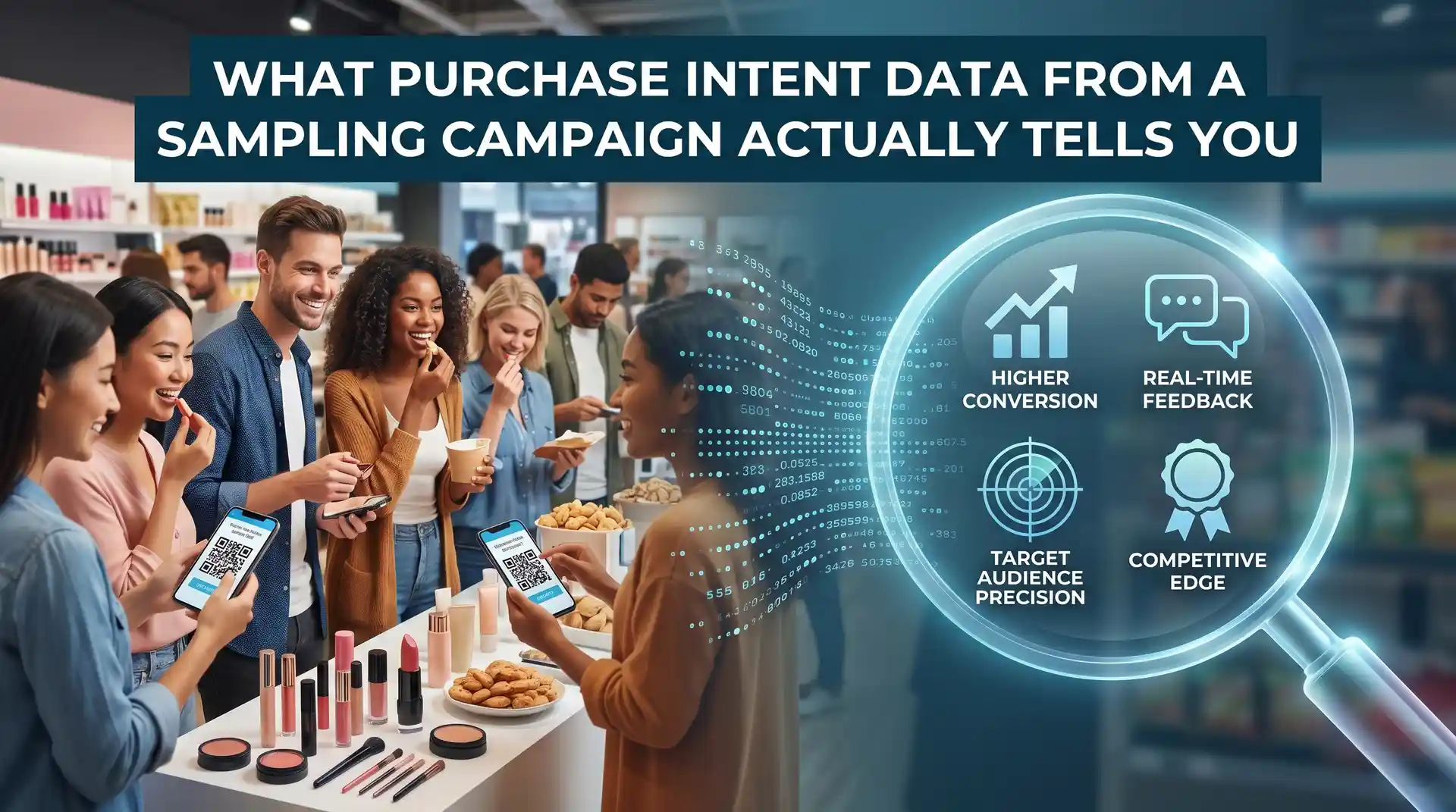
The purchase intent data we collect at the point of sampling consistently shows that 68 to 72 percent of consumers who receive a well-matched sample report high or very high likelihood of purchase within 30 days. That is not an awareness metric. That is a conversion indicator.
The Cost Comparison
Cost per targeted trial through on-ground sampling runs between ‘12 and ‘35 depending on category and location. Cost per meaningful digital engagement — a click followed by 30 or more seconds on-site — runs between ‘80 and ‘200 for the same FMCG category. The investment per trial through sampling is lower. The quality of the trial is incomparably higher.
This does not mean sampling always wins on volume. A digital campaign can reach five million people in a week. A well-executed sampling campaign might reach 50,000 in the same period. But of those 50,000, the conversion rate into first-time purchasers within 30 days will be measurably higher — and each of them represents a genuine, structured data point about your consumer.
When Digital Still Wins
This is not an argument against digital advertising. Digital excels at reach, retargeting, and reinforcing brand recall among consumers who have already been introduced to your product. The most effective FMCG campaigns use sampling to generate first-party trial data and an initial consumer relationship — and then deploy targeted digital campaigns to retarget and convert those same consumers into repeat purchasers. The combination outperforms either channel in isolation.
The Practical Recommendation
If your product is new to market, if you are entering a category with entrenched incumbents, or if you are targeting consumers who are habitual buyers of a competing brand — physical trial is the fastest way to shift consideration. Start with sampling. Use digital to amplify after the trial has happened, not instead of it.
The brands that build long-term consumer loyalty in India's FMCG market are not the ones with the highest digital spend. They are the ones that understood when to put the product in someone's hands.